The Last Wild Places

Journal 01 / Namibia / May 2025

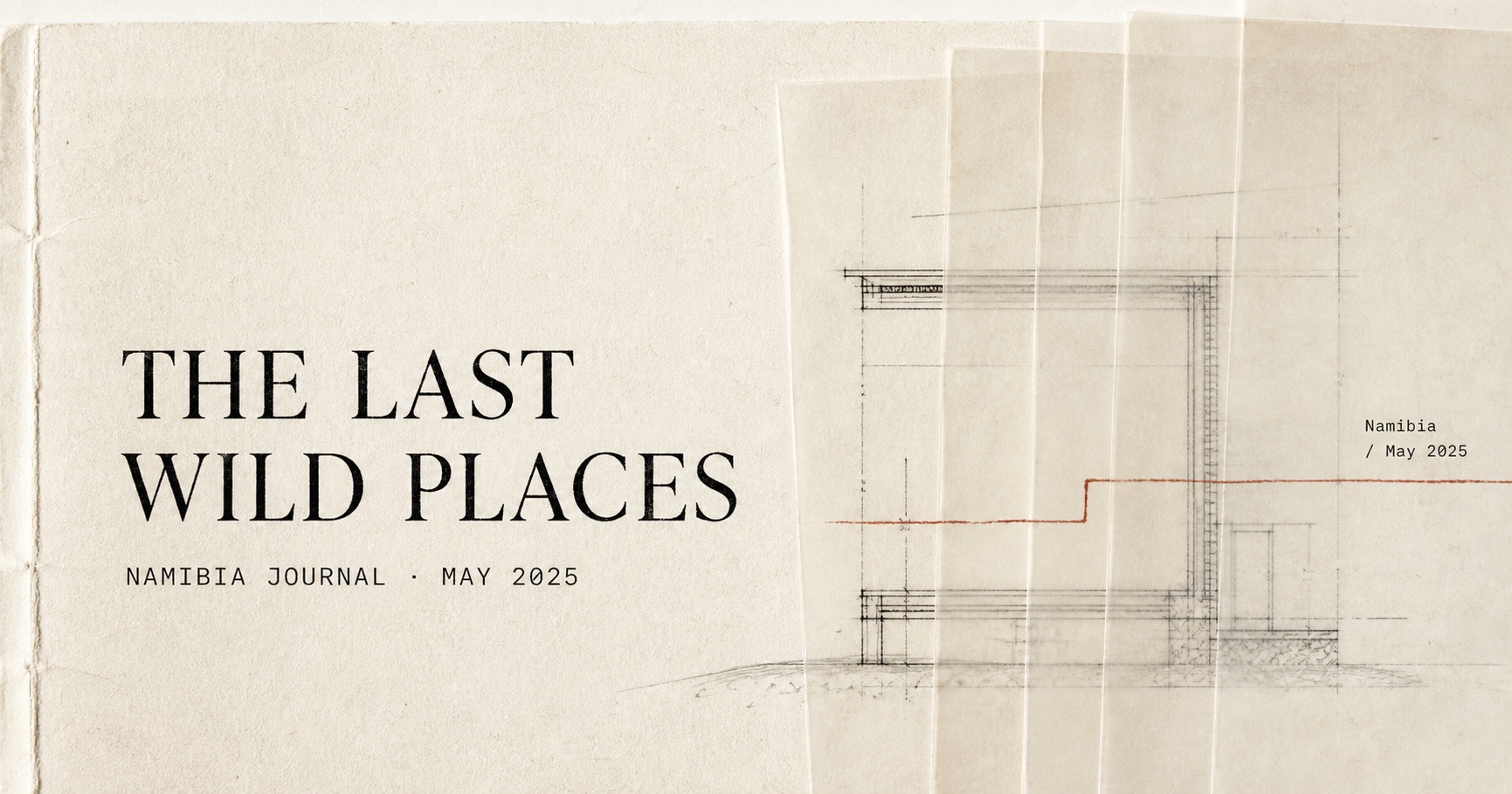
The Last Wild Places — Namibia Journal, May 2025, layered over an architectural field drawing
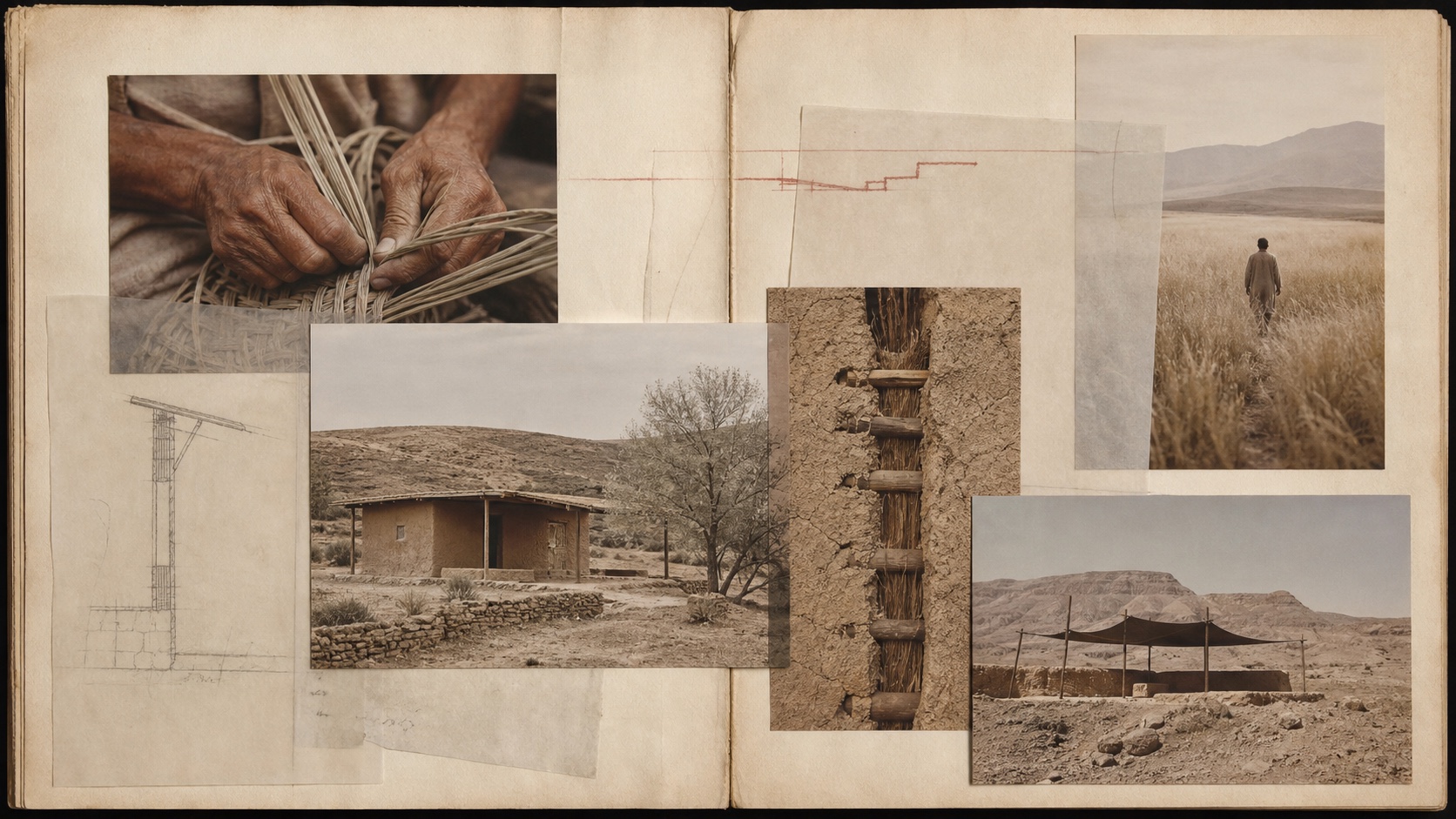
Contact sheet / 001Namibia · May 2025
Field entriesNamibia / 2025

Observation 01

Dwelling as social structure

At Epupa, dwelling is read through social proximity rather than isolated form. Shade, work, conversation and movement continually redraw the threshold. The architectural question is not how to reproduce an image of Himba culture, but which spatial relations allow knowledge and agency to remain active.

Open field note
Image / drawing to comeproximity / threshold / agency

Observation 02

A temporary ground

The dry riverbed operates as corridor, gathering edge and animal route at different hours. A fire established a small field of occupation without enclosure: heat, light, visibility and a boundary that lasted only while it was maintained.

Open field note
Image / drawing to comeoccupation / fire / duration

Observation 03

The coast as section

Swakopmund is a section through incompatible systems: Atlantic moisture, mobile dune, colonial street grid and extractive infrastructure. The coast is not scenery. It is an unstable edge where wind and sand continually revise the ground.

Open field note
Image / drawing to comewind / ground / infrastructure

Observation 04

Deep time, brief occupation

At Deadvlei, the section is measured in centuries: clay pan, dead acacia, moving dune. Any intervention here would have to accept deep time and temporary occupation rather than presume mastery over the ground.

Open field note
Image / drawing to comegeology / duration / limit
Position / 001A living architecture

The premise

The site is already a construction.

Climate, labour, ritual, extraction, memory and ownership are not context around architecture. They are the active systems from which it is made.

01 / from my notes

Hyper-local and sensitive architectures.

Learning from vernacular, adapting, living and working on site—avoiding the romanticism of vernacular, but learning from it and building on top of it.

02 / from my notes

Building is a collective action.

Not one performed by the lone artist-architect. It is the manifestation of social patterns and community life. Work with and really listen to the people you’re designing for, learning from their own building practices.

03 / from my notes

Form alone is not the full picture.

It encompasses materiality, ecologies, physical labor and construction methods. We are responsible for understanding the entire material process—the full ecology.

04 / from my notes

Architecture establishes conditions.

A place is not completed by its formal image. Its value lies in what it permits: gathering, work, exchange, repair and forms of life the architect cannot fully predict.

Research atlasForce → ground → occupation

A method of looking

Climate is not context.
It is a spatial
system.

The archive

A working
instrument.

Notes, sections, photographs, measurements and testimony do not illustrate a conclusion. They expose conflicts between ground, climate, labour and occupation from which a project can be tested.

01Encountervoice / work / negotiation
02Sectionground / threshold / material
03Forceair / water / heat / movement
04Durationgrowth / repair / decay / return
Future practiceResearch → architecture

Hospitality as a test case

Who owns the ground
after the guest leaves?

A hotel inserts capital, infrastructure and external movement into an existing ecology. The project must account for land tenure, water, labour, supply, waste, seasonal use and who retains value.

Preservation is not an aesthetic category. It cannot depend on fixing culture into a consumable image. Architecture can instead support the conditions through which knowledge, ownership and daily practices continue to change on local terms.

Working question 01Can hospitality finance continuity without turning culture into product?
88

Why this journal exists

A research practice before a building practice.

The Last Wild Places is an expanding field archive concerned with how architecture is produced by climate, ground, cultural practice and political economy.

Each entry isolates a condition, records its forces and tests a proposition. The research will inform future places of hospitality, but it is not their branding exercise; it is the evidence against which they will be judged.